
When considering a glass railing for a balcony, deck, staircase, mezzanine, or pool enclosure, many homeowners ask the same question:
Are glass railings really safe?
It’s a completely understandable concern.
After all, glass is transparent and often appears more fragile than it actually is.
Yet glass railings are used in thousands of residential and commercial projects throughout North America.
When properly designed and installed, they provide excellent safety while maintaining unobstructed views and allowing natural light to flow freely.
Here’s what you should know.
1. Glass railings are not made from ordinary glass
One of the most common misconceptions is that glass railings use the same type of glass found in residential windows.
In reality, glass railings are typically manufactured using 12 mm tempered glass specifically designed for this application.
Tempered glass is significantly stronger than standard glass.
It is designed to withstand the everyday stresses that railings experience, including:
- people leaning against them
- normal structural movement
- vibration
- wind loads
- temperature changes
This is also why most homeowners are surprised by how heavy and solid the glass panels feel during installation.
2. Safety depends on much more than the glass itself
When people think about glass railing safety, they often focus only on the glass.
However, the glass is only one component of the system.
Safety also depends on:
- structural support
- anchors
- mounting systems
- panel dimensions
- span lengths
- overall project design
A safe glass railing is always the result of multiple components working together properly.
3. Why doesn’t a glass railing break when someone leans on it?
This is probably one of the most common questions.
The answer is simple: glass railing systems are designed to withstand specific loads and forces.
The glass is not simply placed into position.
Panel dimensions, mounting systems, and structural requirements are all selected based on the project.
This is why two railings that appear similar may use completely different systems depending on:
- height
- location
- panel width
- structural conditions
4. Are glass railings safe for families with children?
For many families, this is the most important question.
In most cases, glass railings are an excellent option.
Unlike traditional railings with vertical balusters, glass railings do not create openings that children can climb through.
Many parents also appreciate the clear visibility provided by glass, especially around:
- swimming pools
- decks
- balconies
- staircases
As with any railing system, compliance with applicable building codes remains essential.
5. Do glass railings withstand Canadian winters?
Yes.
Exterior glass railing systems are designed to withstand:
- snow
- ice
- rain
- wind
- freeze-thaw cycles
- significant temperature fluctuations
The quality of the hardware, mounting systems, and installation plays a major role in long-term performance.
This is one reason why exterior projects often require different considerations than interior installations.
6. Why do some glass railings move slightly?
Another common concern is movement.
Contrary to popular belief, slight movement is not always a sign of a problem.
Depending on the system, some flexibility can be completely normal when pressure is applied.
The goal is not necessarily to eliminate all movement.
The goal is to ensure the system performs safely according to its design requirements.
Several factors influence how much movement may be felt:
- mounting method
- panel width
- railing height
- presence of a top rail
- structural conditions
7. Are all glass railing systems the same?
Not at all.
Several systems are commonly used, including:
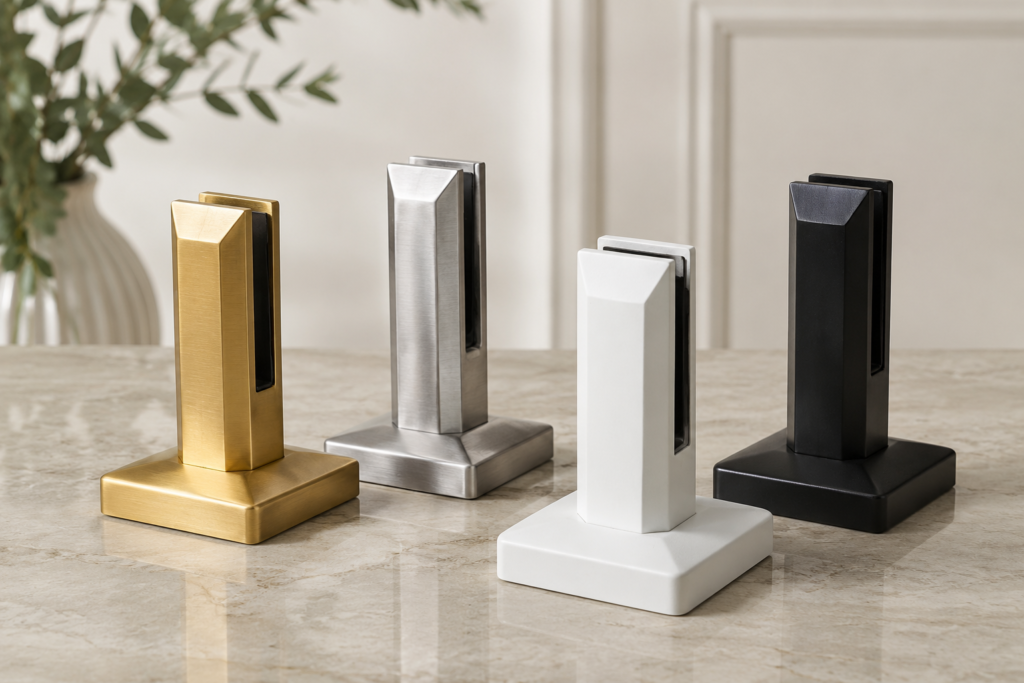
- spigots
- base shoe systems
- post-supported railings
- top rail systems
- frameless glass railings
Each system offers different advantages depending on:
- the desired appearance
- the view being preserved
- the existing structure
- the desired level of rigidity
The best option depends on the specific project.
8. Why are glass railings so popular?
The answer is simple.
Glass railings help:
- preserve views
- maximize natural light
- create a modern appearance
- add value to a property
- maintain an open feeling
This is particularly attractive for:
- pool enclosures
- decks
- balconies
- staircases
- mezzanines
Frequently Asked Questions About Glass Railings
Can a glass railing break?
While no material is indestructible, tempered glass is designed to withstand significant impact and everyday use. Properly specified and installed glass railings are extremely durable.
Do glass railings require a top rail?
The answer depends on the specific project, local building requirements, and the railing system being used.
Are frameless glass railings safe?
Yes. When properly engineered and installed, frameless glass railings provide excellent safety while maximizing visibility.
Are glass railings difficult to maintain?
Not at all. Regular cleaning is usually sufficient to keep the glass looking clear and attractive.
Do glass railings increase property value?
Many homeowners appreciate the modern appearance, unobstructed views, and premium feel that glass railings bring to a property.
Conclusion
Yes, glass railings are safe when they are properly designed and professionally installed.
Safety depends not only on the glass itself, but also on:
- structural support
- mounting systems
- dimensions
- engineering considerations
- installation quality
This is why glass railings are now widely used in residential and commercial projects alike.
To see examples of completed projects, visit our projects gallery.
You can also learn more about different architectural glass options in our guide to decorative and architectural glass types.